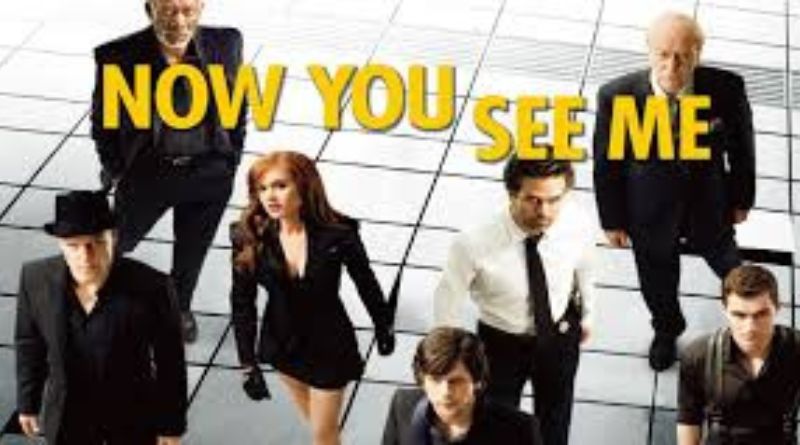
I’ll keep this review spoiler-light. Now You See Me (2013) is usually described as a magician heist film, but if you care about card games, it has a different kind of value. The movie is full of moments that feel familiar to anyone who has learned a clean shuffle, watched a good false cut, or tried to hide a reaction when a plan is working. It’s not “a poker story,” but it constantly uses the same skills poker rewards: attention control, timing, reading people, and building a believable line of action. I’m writing this as someone who enjoys films and also enjoys how card players talk about decisions, not as someone trying to sell anything.
How the Plan Is Built
The film doesn’t treat the Horsemen as random geniuses. It shows them as people who prepare the environment first, then run the move. Early on, you can already see the pattern: they choose a setting where the crowd expects to be fooled, they set a rhythm with clean stage control, and they make sure the “main event” is so loud that smaller actions look unimportant.
In these scenes, I stop watching it as a heist and start watching it as card handling. The film keeps the camera close to the hands and small movements, then cuts away at the exact moment you’d normally want one extra second. It’s not subtle, but it’s effective. You can feel when something is being “covered” by timing, not by mystery. On a first watch, you register it as style. On a second watch, you notice it’s set up.
My honest view: sometimes the preparation is too smooth. A few beats rely on convenient timing and people reacting exactly as the plan needs. But the film is consistent about one rule: the Horsemen don’t “win” by having magic powers. They win by controlling sequence, pressure, and what others think is possible in that moment. That logic is why the movie holds together.
Where the Audience Gets Fooled
The best trick in Now You See Me is not a single reveal. It’s how the film makes you feel informed while keeping you slightly under-informed. Mid-movie, especially during larger show sequences, you’re shown real details—faces, movements, reactions—, but you’re not shown the full context that would let you judge those details correctly. The movie doesn’t need to lie. It only needs you to complete the story in your head.
This is classic sleight-of-hand thinking. In good card handling, you don’t hide everything. You hide one thing, and you keep everything else clean, so the hidden part feels impossible to suspect. The film does the same with editing: it gives you a clean “front,” then it moves quickly past the parts you would normally question. Viewers often call this “misdirection,” but what actually happens is simpler: your attention is managed, and you accept a neat explanation because it feels comfortable.
If you like poker from a learning angle, this is also the bridge to real decision-making. Poker is a game where you build conclusions from partial information: timing, patterns, and what line makes sense. For a neutral study reference, you can look at how players discuss ranges, odds, and decision lines around Americas Cardroom, not as a push to play, but as an example of how people learn the game’s logic through hand breakdowns and clear reasoning.
The Poker Takeaways (What Transfers to Real Play)
Here’s what I’d keep from this film if your goal is to understand poker better, not to chase drama.
First: separate facts from assumptions. The movie repeatedly shows people acting on a “complete story” that is not complete. Poker punishes that same habit. One strong clue does not equal certainty. The useful mental move is: “What range of hands fits this action?” and “What would I do against that range?”
Second: timing matters more than people think. In the film, pressure is created through speed and spectacle. In poker, pressure is created through emotion and ego. The result is similar: rushed decisions. A practical fix is boring but powerful—slow down, check the price you’re getting, and ask what future actions look like if you continue.
Third: learn the simple math ideas that keep you grounded. You don’t need advanced formulas to start. Pot odds answer “how often does this need to work?” Expected value answers “Is this profitable over time?” The movie doesn’t teach these directly, but it rewards the same mindset: you don’t need perfect reads, you need solid decisions that make sense repeatedly.
My one realism note: the film is cleaner than real poker. Real games include variance. Correct decisions still lose sometimes. That’s why the best takeaway is process, not outcome.
Rewatch Notes: What You Missed the First Time
If you rewatch the film, don’t chase the twist. Watch the handling. I mean that most practically: watch hands, watch the rhythm of repeated actions, watch when a movement is made to look routine. When you focus on those small details, the movie becomes less “magic mystery” and more “how control is built.”
A good spoiler-safe exercise is to pick one early performance and one later performance and write three short notes for each:
- What is clearly shown?
- What is not shown?
- What assumption did I make anyway?
That habit is useful in poker study, too. When you review hands, the biggest leaks usually come from assumptions that felt “obvious.” The film plays with that same weakness. Also, to watch character reactions under pressure. Some characters need control. Some need recognition. In poker, those needs often create predictable mistakes—over-bluffing, stubborn calling, or trying to “prove” something. The movie exaggerates, but the behavior is familiar.
Quick wrap inside this: Now You See Me is most enjoyable when you treat it like a skills film. It rewards careful attention, it punishes rushed certainty, and it gives card-game fans a clean reason to rewatch without needing spoilers.